

Content Length For SEO – A lot of marketers, writers, and business owners still ask: “How long should a blog post be for SEO?” It’s a good question, but not really the right one.
Search engines don’t give higher rankings just because a post has more words. They reward content that clearly answers what people are looking for. A good blog post should show expertise and give value in a clear, easy way. That’s why the old debates about the “perfect blog length” are not very useful anymore.
Some research shows that the average length of content on the first page of Google is about 1,447 words. But averages don’t tell the whole story. In some industries, shorter posts do better. So there’s no single answer for how long a blog post should be.
The real answer depends on your content’s goal, your readers, and your platform.
In this blog, you’ll learn how to:
1) Think differently about how long your articles should be for SEO and user experience
2) Know when word count matters and when it doesn’t
3) See how search intent, depth of content, and your platform affect ideal length
4) Adjust your strategy for AI search tools, Google AI Overviews, and AI Mode
5) Create a repeatable plan to make smarter content decisions
Whether your goal is more traffic, leads, or engagement, this guide will help you find the right balance between quality, strategy, and results.
In this guide:
Word Count Isn’t Everything – Context Matters More
Blog Length Insights: What Research Shows
Let Your Goals Decide How Long to Write
Write for Search Intent, Not Just Word Numbers
More Words ≠ Better Content – Focus on Quality
Checklist Before Writing: How to Decide Blog Length
Is Long-Form Content the Key to Google Rankings? Not Always
Repurpose Smartly Across Channels – Don’t Just Rewrite
What Google Values: Expertise, Trust, and User Experience
The Ideal Length: Where Word Count Meets Results
Conclusion
Word Count Isn’t Everything – Context Matters More
Trying to hit a fixed number of words for SEO isn’t the right approach. Google doesn’t care about hitting a certain word count — it cares about giving readers what they actually need.
Sometimes, a short 600-word blog can do better than a long 2,000-word guide if it answers the reader’s question clearly. Other times, you may need 2,000 words to fully cover a topic. That’s why context — what your audience needs — is more important than just counting words.
Google even says: “When a user searches, our systems show the pages we think are most helpful and relevant.” Things like location, language, device, and how well your content matches the search all affect the results.
Here’s how to think about context simply:
Who is your audience? Beginners need examples and explanations, experts want quick answers.
What type of question are you answering? Some topics need deep detail, others just need clear answers.
Where is the user in the funnel? Educational posts at the start of the journey are different from comparison or decision posts at the end.
AI and search engines now check if your content really helps the reader, not just if keywords are present. Irrelevant content can even hurt your rankings.
The goal isn’t to reach a magic number of words. The goal is to match your content to what readers expect. When you do this, people stay longer, engage more, and Google notices — that’s what really matters.
Blog Length Insights: What Research Shows
You don’t have to focus only on word count, but it helps to know what works. Research from top blogs shows a pattern: longer posts often rank higher on Google, but only if they actually give useful information.
It’s not about adding words for the sake of it — it’s about adding value that readers need.
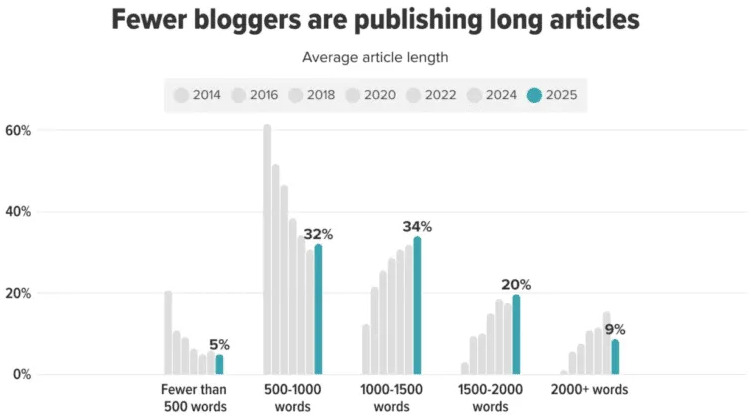
Blog Length Insights: What Research Shows
Here are some general numbers for blog posts:
In 2026, SEO blogs perform best at around 1,700–2,400 words (Hook Agency).
Most top-ranking posts are between 1,400 and 2,400 words.
WordStream found that their best blogs average 2,700–3,000 words over three years.
Big guides or evergreen content often go over 2,000 words.
Listicles or how-to posts usually work best at 500–1,500 words.
B2B blogs are often longer than B2C blogs, especially for big, important purchases.
But here’s the key: word count isn’t the most important thing. What matters more is covering the topic well enough to answer users’ questions. That’s how you build authority on a topic.
If you’re trying to hit a keyword, don’t just guess the word count. Check the top-ranking posts for that keyword and make your blog even better and more helpful.
Let Your Goals Decide How Long to Write
SEO content usually comes in two types: long-form and short-form. Neither is better or worse — it depends on what you want to achieve. Both can rank well if they fit the reader’s intent.
Long-form content is usually over 1,000 words. It works best for:
Detailed guides
Thought leadership pieces
Topics with high competition
Long content gives you space to show expertise, answer extra questions, and build authority. When people talk about “best blog length,” they usually mean this type of content.
Examples of long-form content:
Blog posts and guides
Tutorials and pillar pages
White papers and ebooks
Webinars or online events
Short-form content is usually less than 1,000 words. It works best for:
Social media posts
Email newsletters
Quick-read blog posts
It’s short, clear, and easy to share, which makes it perfect for engagement and reaching more people.
Examples of short-form content:
News-style blog posts
Emails and newsletters
Infographics
Social media content like TikTok videos, Instagram posts, and memes
Also, when thinking about SEO, check what type of content is already ranking for your target keywords — whether it’s a guide, a listicle, or a tutorial — and plan your content format accordingly.
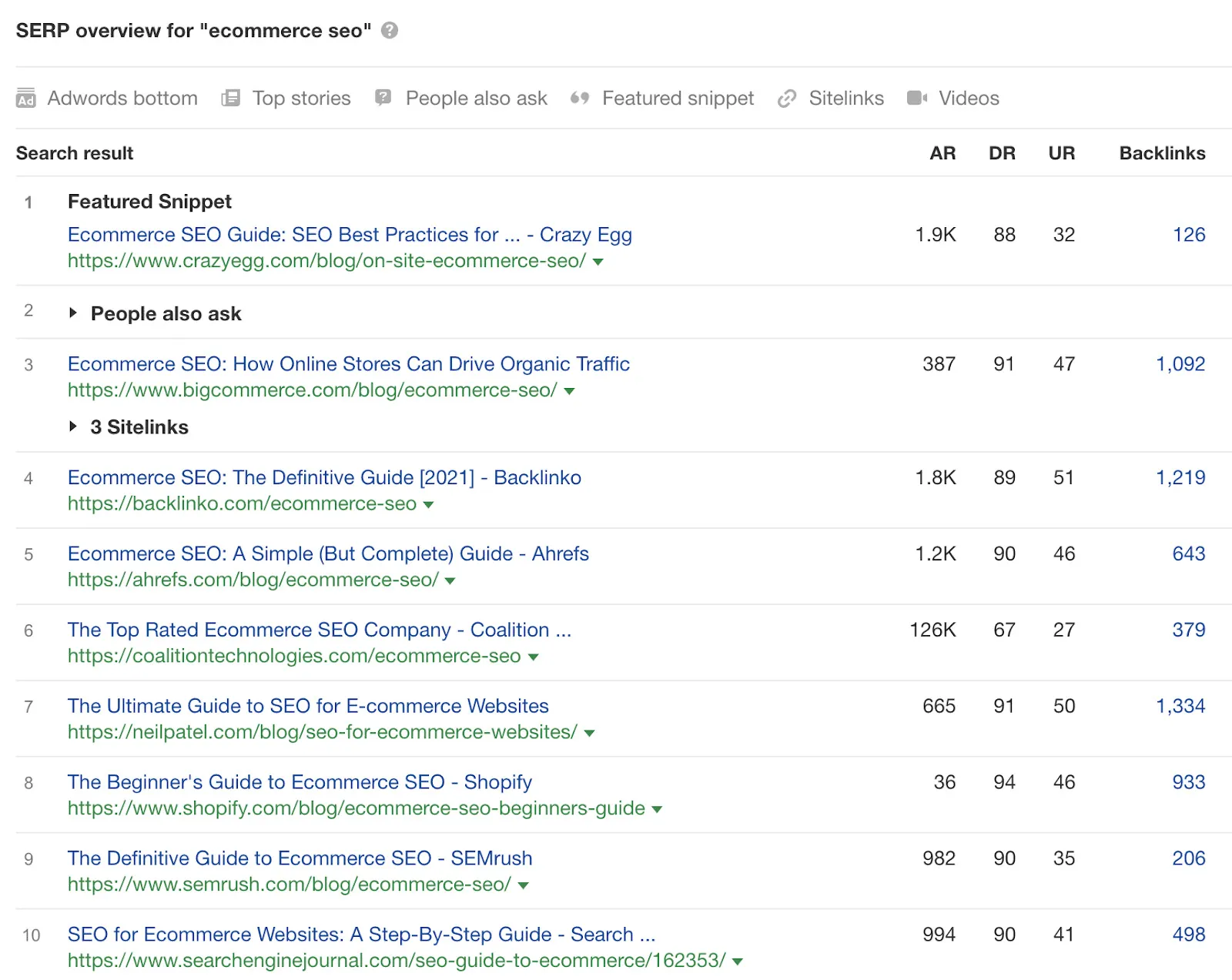

Write for Search Intent, Not Just Word Numbers
Don’t worry about writing a set number of words for SEO. If you want your content to rank well and help readers, you first need to understand why people are searching.
This is called search intent, and it should decide how long your content needs to be, not the other way around.
There are four main types of search intent:
Informational – The reader wants to learn or know something.
Navigational – The reader is looking for a specific website, brand, or page.
Transactional – The reader is ready to buy or take action.
Commercial/Research – The reader is comparing options or researching before buying.
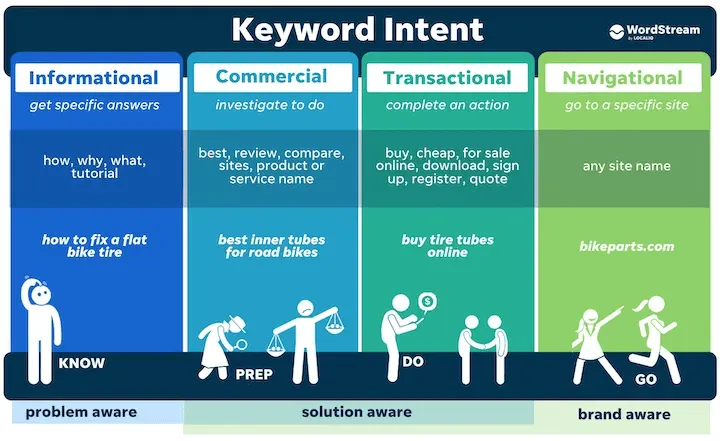
Each type of search intent tells you what kind of content to create and how long it should be.
1. Informational Intent
These are questions where people want to learn or understand something deeply.
Example: “How to write a business proposal” or “What is zero-click content.”
You can’t answer these in just a few sentences — you need detailed content.
Recommended length: 1,500–2,500+ words.
2. Navigational Intent
People here are looking for a specific site or page, not content.
Example: “Mailchimp login” or “Ahrefs blog.”
Keep it simple — a landing page or clear link is enough. No need to worry about word count.
3. Transactional Intent
These users are ready to buy or take action.
Example: “Buy a standing desk online” or “Best paid ads agency.”
Your content should be short, convincing, and trustworthy.
Recommended length: 1,000–1,500 words, depending on the topic.
4. Commercial/Research Intent
Users are comparing options before making a decision.
Example: “HubSpot vs Mailchimp” or “Top email marketing tools.”
Include pros and cons, comparisons, and real use cases.
Recommended length: 1,500–2,000 words.
If your blog is too short or too long for what people are actually looking for, it won’t do well, even if it’s well-written or full of keywords.
Many blogs fail because they focus only on hitting a certain word count instead of asking:
“What does the reader really need to know to make a decision?
More Words ≠ Better Content – Focus on Quality
A long blog post doesn’t help if it doesn’t say anything useful. Today, with so much AI content online, search engines rank pages that are helpful, clear, and trustworthy — not just long. Length only matters when it adds value.
Depth Means Quality, Not Size
Having depth means your content:
Answers the main question completely
Covers related topics or follow-up questions
Backs up points with examples, data, or expert advice
Clears up any confusion the reader might have
You don’t get depth by adding extra words. You get it by really understanding your topic and organizing your content carefully. Many people asking “how long should my blog post be for SEO?” forget this part.
Authority Comes from Clarity
Anyone can write a long post to hit a target word count. But few can write something clear, complete, and well-structured. That’s how you build authority — not by words, but by quality and usefulness.
Examples:
A tutorial on embedding schema in WordPress might only need 700 words, but still rank well.
A detailed article on AI in content marketing might need 2,500+ words to fully explain the topic.
Both are fine. Both can rank. What matters is whether your content gives readers insights they can’t easily find elsewhere. The best blog length is the one that covers the topic better than your competitors, not the one that’s just the longest.
Depth Builds Topical Authority
Search engines also look at overall site authority. Brands that publish high-quality, related content consistently earn more trust over time.
Long-form content can serve as the main pillar page.
Shorter content can support it as cluster articles.
The key is creating the right content for the right topic, with the right amount of detail.
Checklist Before Writing: How to Decide Blog Length
Before you write a single word, you should know roughly how long your blog should be. Don’t just guess — plan it strategically. Word count is a result of good planning, not something you add after writing.
Use this simple checklist to decide the right length:
1. Check What’s Already Ranking
Search your main keyword and look at the top 5 results:
How long is their content?
How is it structured?
Is it a quick overview or a detailed guide?
You’re not copying them, just seeing what readers expect and what Google likes.
2. Match Content to Keyword Intent
Decide what type of content fits the reader’s goal:
Informational → detailed blog post or guide
Transactional → short, persuasive content
Comparative → structured comparisons or tables
If unsure, go back to the search intent section of your blog and follow that.
3. Find Gaps You Can Fill
Check competitors for missing pieces:
Are they missing important subtopics?
Is the information outdated?
Are there no examples, visuals, or clear explanations?
Build your blog around what they missed — that’s how you earn higher rankings.
4. Check Keyword Difficulty
Harder keywords usually need longer, more detailed content.
Aim for 1,500–2,500+ words for competitive topics.
Use tools like Ahrefs, Semrush, or Ubersuggest to see keyword difficulty and performance.
The more competition, the more your content must be trustworthy and complete.
5. Plan Internal Links
Add links to your own pages where it makes sense:
Link to services like content writing or copywriting in guides.
Link to SEO, PPC, or email marketing pages when talking about funnels or conversions.
Link to social media services in sections about cross-platform content.
Internal links help SEO, improve user experience, and increase conversions.
Is Long-Form Content the Key to Google Rankings? Not Always
Long blog posts often appear at the top of search results, but length alone doesn’t make them rank. The idea that writing a “perfect number of words” automatically boosts SEO is a myth.
Neil Patel explains this clearly: many top-ranking pages are long, but they rank because of quality and authority, not just because they are long.
For example, the keyword “content marketing” is very competitive. The top pages are long articles from trusted sources like Content Marketing Institute, Mailchimp, and Neil Patel. They rank well, not because of length, but because they are:
Complete and detailed
Well-structured
Trusted by readers
Backed by lots of links from other sites
Even for a less competitive keyword like “B2B content marketing strategy”, the top results are long (3,000–4,400 words). But the reason isn’t just “more words” — it’s that the topic needs in-depth explanations.
Many people make the mistake of seeing long pages rank and thinking “longer = better”. The truth is, pages do well because of a mix of things:
Strong backlinks (other sites linking to them)
Content that matches what readers are looking for
High-quality writing and good structure
Trusted website or brand
Readers are spending time on the page and not leaving immediately
The Real Lesson
Long blog posts often rank well, but not just because they’re long. They rank because they are helpful, relevant, and trustworthy. Writing more words can help cover a topic fully, but it won’t fix a weak strategy or shallow ideas.
If you’re asking, “How long should a blog post be for SEO?” — the answer isn’t about word count. It’s about whether your content deserves to rank.
When your content is high-quality, useful, and credible, length becomes a bonus, not a shortcut.
Repurpose Smartly Across Channels – Don’t Just Rewrite
Publishing your blog is just the start. The real value comes when you use it on other channels. A 2,000-word blog won’t work as-is on Instagram or LinkedIn, but it has lots of insights, stats, quotes, and tips that can be shared in different ways.
Social Media
Short and clear content works best on social platforms. Break your blog into small, easy-to-read pieces:
X (Twitter): short hooks, bold statements, or stats
LinkedIn: short stories, carousel posts, or video summaries
Instagram: tips, carousel highlights, or short captions
TikTok: quick explainer videos from blog points
You don’t need to rewrite the blog — just extract and reshape what’s already there.
Email Marketing
Use your blog as the main topic for emails:
Use the intro or conclusion as a teaser
Highlight one key point with a link to the full blog
Turn the blog into a quick tip or takeaway
Emails should be short and focused, under 300 words, so readers get the main idea fast.
Ads and Landing Pages
Your blog can also help with ads or landing pages:
Use headlines or hooks from the blog in ads
Link to PPC, SEO, or service pages from the blog
Create gated guides from long blogs to collect leads
When you use your blog this way, one post can do many jobs. The original length doesn’t limit its value — it actually increases it.
What Google Values: Expertise, Trust, and User Experience
Many writers focus too much on word count. Google doesn’t care about numbers. It cares about trustworthy, accurate, and helpful content — and whether people stay on your page or leave quickly.
This is where E-E-A-T comes in: Experience, Expertise, Authoritativeness, and Trust. Google uses this to judge content quality, no matter how long your blog is.
Here’s how to make your content match what Google likes:
1. Write From Real Experience
Content based on real knowledge or personal experience works better than generic overviews. Whether you’re writing about SEO, social media, or anything else, show what you actually know and have done, not just repeat what others say.
2. Show Your Expertise
Expertise doesn’t mean giving too many stats. It’s about explaining complex ideas clearly. Use real examples, specific tips, and your own insights to show you really understand the topic.
3. Build Authority by Being Consistent
Authority isn’t just saying “I’m an expert.” It comes from posting regularly about a topic and connecting your posts. When your blog covers a topic in multiple, related posts, Google starts trusting your site.
4. Earn Trust Through Good User Experience (UX)
Things like easy layout, fast loading, mobile-friendly design, readability, and helpful links matter a lot. If your page is messy or confusing, users will leave — and Google sees that as a sign your content isn’t helpful.
Internal links are important too. Linking to your related services (like content writing, PPC, or email marketing) shows depth and builds trust. It proves your site has useful content, not just long words.
The Ideal Length: Where Word Count Meets Results
You don’t need to hit a specific word number every time you write. You just need to write enough to do the job well — not more, not less.
The best content length is the one that:
Answers the question clearly
Keeps the reader interested
Helps you get results
One expert explained it simply:
Your content should be deep enough to answer the user’s question and rank on Google. But it should not have extra fluff that makes people bored. If people stop reading, they won’t become customers.
The “sweet spot” (the perfect balance) depends on four things:
What the user is searching for (search intent)
How complicated the topic is
What your competitors are doing
What result do you want (traffic, leads, sales, etc)
For B2B Brands (Business to Business)
If your audience is businesses, they usually want:
Detailed information
Data and examples
Clear strategies
If you’re writing about serious topics like automation, SEO, or marketing strategy, 800 words won’t be enough.
Recommended length: 1,800 to 2,500+ words
For B2C Brands (Business to Consumer)
Regular customers usually want:
Quick answers
Simple explanations
Easy comparisons
You still need quality, but you should get to the point faster.
Recommended length: 1,200 to 1,800 words
For Product Pages and Landing Pages
Here, length doesn’t matter.
If you already answered the question and built trust, stop there. These pages should only be as long as needed to:
Explain the offer
Build trust
Convince people to take action
There is no fixed number.
The main point:
Don’t focus on the perfect word count. Focus on what result you want — more traffic, better rankings, more leads — and write enough to achieve that.
Strategy is always more important than just writing more words.
Conclusion
There’s no perfect word count in SEO — only content that truly satisfies your audience’s intent.
The right content length is the one that answers questions, provides real value, and stays clear of unnecessary fluff.
In 2026, SEO isn’t about writing more. It’s about writing smarter.
At A99 Solutions, we help businesses create content strategies that align with search intent, engage readers, and drive measurable results.