
Best SEO Tools In 2025 – When we first started working with SEO tools back in 2009, things were much simpler. Over the years, we’ve tested dozens of platforms and learned one key thing — there’s no single “best” tool for everyone.
Choosing the wrong SEO software can be a waste of both time and money. That’s why, after years of using the top three — Semrush, Ahrefs, and Moz — we’ve created this honest comparison to help you make the right choice.
In this blog, you’ll find a clear breakdown of these tools — so you can confidently pick the one that fits your business goals.
Why Use an SEO Tool for Your Online Business?
Using an SEO tool is essential if you want your website to perform better and rank higher on search engines. The right SEO tool helps you attract more visitors, understand what’s working, and grow your business effectively.
Here’s what you can do with tools like Semrush, Ahrefs, and Moz:
1. Track Your Rankings
All three tools let you monitor your website’s performance on search engines. You can track keyword rankings, see where you stand, and measure progress over time.
2. Optimize Your Content
Each platform provides powerful site audit features that show how to improve your content for better visibility. They highlight technical issues, missing keywords, and opportunities to boost your SEO.
3. Analyze Your Competitors
You can easily research competitors to see what keywords they rank for, where their backlinks come from, and how you can outperform them in search results.
4. Discover New Keyword Ideas
If you’re running out of keyword ideas, these tools can help you find high-volume, low-competition keywords that are easier to rank for — helping you grow traffic faster.
5. Track Backlinks
SEO tools also let you check which websites link to yours. Understanding your backlinks helps you improve your link-building strategy and strengthen your website’s authority.
In short, SEO tools like Semrush, Ahrefs, and Moz give you everything you need — from keyword research and content optimization to competitor tracking and backlink analysis — to take your online business to the next level.
1. Semrush
Semrush is one of the most powerful and widely used SEO tools available today. Originally launched in 2008 as “SeoDigger,” it started as a small competitor research tool and has since grown into a complete digital marketing platform. The company also created SEOquake, a handy browser extension that helps with quick SEO analysis.
Semrush is designed to be an all-in-one solution for managing SEO, content marketing, paid ads, and social media — everything you need to strengthen your online presence.
Top Semrush Features
Keyword Research: Easily discover new keyword opportunities and track performance for any term.
Competitor Analysis: See which keywords your competitors rank for, find their best-performing content, and uncover potential gaps to target.
Local SEO Tracking: Manage local listings, audit your site, and monitor search positions to improve visibility in your area.
Advertising Insights: Explore PPC keywords, monitor domains, and analyze advertising data to optimize paid campaigns.
Social Media Tools: Schedule and track posts directly on social platforms, analyze engagement, and research top-performing social ads.
Content Optimization: Evaluate your content’s SEO performance and use the built-in AI writing assistant to create or improve your articles.
Custom Reports: Generate visually appealing reports for your projects, domains, or keywords to share progress with your team or clients.
Semrush stands out because it brings together everything you need for SEO and digital marketing in one place — making it one of the most feature-rich tools on the market.
Ease of Use
Although Semrush offers a massive amount of data, its clean and intuitive dashboard makes it easy to navigate. Simply enter any domain, keyword, or URL in the search bar, and you’ll instantly get detailed insights that help you make data-driven decisions.
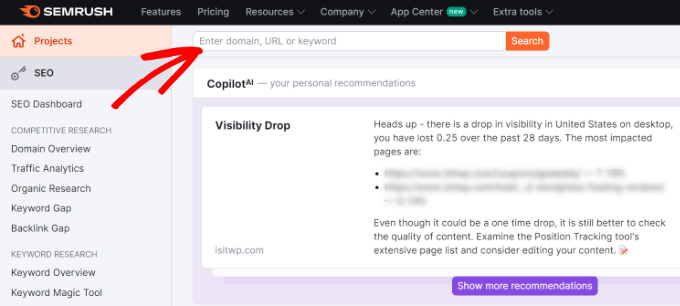
On the left side, you’ll find all the tools arranged in a clear and simple menu.
Each category has its own dashboard that works just like the main search tool. For example, in the Content Marketing section, you can explore new topic ideas, create SEO content templates, use the writing assistant, and manage all your content tasks in one place.

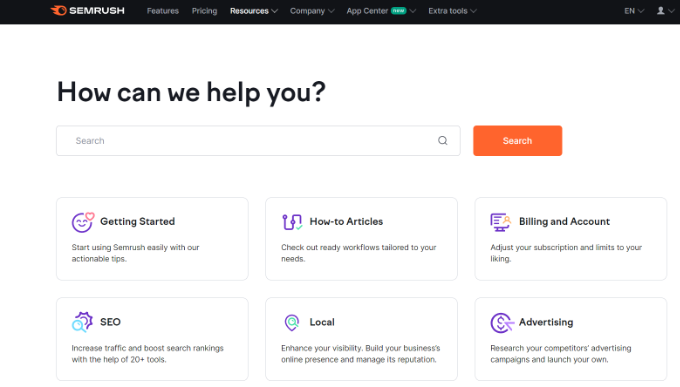
Semrush also provides a detailed help center filled with step-by-step guides and tutorials to help beginners get started easily.
Plus, it offers a knowledge base and Semrush Academy, where you can access a wide range of free SEO courses to learn and improve your skills.
Semrush Pricing: Plans start at $117.33 per month.
What We Like About Semrush:
Semrush stands out because it’s a complete SEO and digital marketing toolkit. It covers everything from keyword research and competitor analysis to on-page SEO audits, social media management, and link-building. The platform also includes a writing assistant and SEO content templates that make content creation easier and more effective. We also love the clear data visuals and customizable reports, which make tracking performance simple even for beginners.
What We Don’t Like About Semrush:
While Semrush offers a lot, it does come with a few downsides. The traffic estimates aren’t always precise, and the pricing can feel high for startups or small businesses just getting started.
2. Ahrefs
Ahrefs is another leading SEO tool trusted by marketers, agencies, and SEO professionals worldwide. Founded in 2010, it started as a site explorer but quickly evolved into a complete SEO platform packed with data and insights.
It provides nearly everything you’d expect from a top-tier SEO tool, all inside a clean and beginner-friendly interface, along with plenty of guides and learning resources.
Ahrefs Key Features:
Site Audit: Run a full health check of your website and discover issues that could affect rankings.
Site Explorer: Analyze your competitors’ websites, find their best-performing keywords and content, and understand what makes them rank higher.
Keyword Explorer: Discover new keyword ideas, analyze difficulty, and track performance.
Content Explorer: Search for high-performing articles on any topic and learn from their strategies.
Click Data: Go beyond search volume and see estimated click-through rates for more accurate targeting.
Rank Tracker: Monitor keyword positions across different locations and devices.
Ahrefs covers all the major SEO needs — from keyword research to link tracking — but it doesn’t include PPC tools or social media monitoring like Semrush does.
Ease of Use:
Ahrefs has a simple dashboard that’s intuitive even for beginners. Each feature is organized in clear sections, making navigation smooth. You just enter a domain in the search bar, and Ahrefs instantly gives you an overview — including organic traffic, backlinks, top pages, and ranking keywords — all in one place.
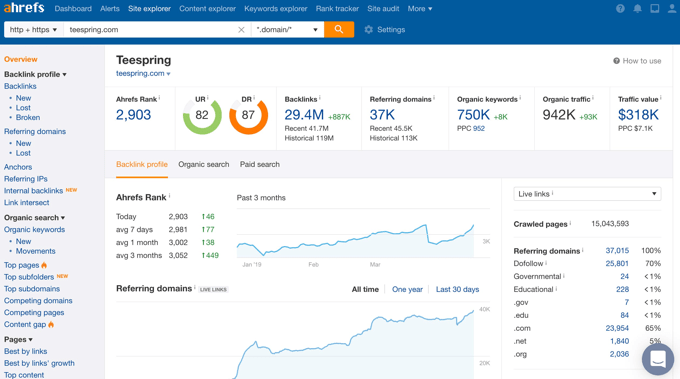
Ahrefs also makes it easy to get help when you need it. There’s a quick help button on every page that connects you directly to their support team.
They also provide a large library of tutorials, videos, and guides that explain how to use each tool step by step — perfect for beginners who are still learning SEO.
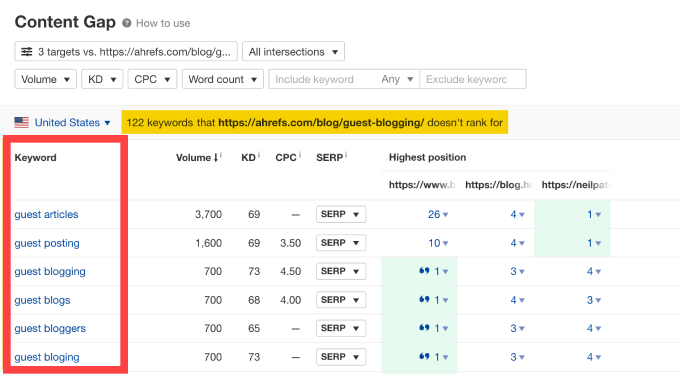
On top of that, Ahrefs offers useful features like content gap analysis, which lets you compare your site with your competitors. This shows you what topics they’ve covered that you haven’t yet, helping you discover new content ideas to boost your traffic.
Ahrefs Pricing: Starts at $129 per month.
What We Like About Ahrefs:
Ahrefs is one of the most powerful SEO tools available today. Its biggest strength lies in keyword research and competitor analysis. You can easily check which keywords your competitors rank for, what backlinks they have, and how their content performs.
The interface is simple and easy to navigate, making it great for beginners and professionals alike. We also really liked the site audit feature, which gives detailed insights into website performance and SEO issues—more in-depth than most other tools.
What We Don’t Like About Ahrefs:
One downside is that the keyword ranking tracker doesn’t always update frequently, so you might not see real-time results.
Also, unlike Semrush, Ahrefs doesn’t offer PPC or social media tools, so it’s mainly focused on SEO. Another drawback is its credit-based system—each report or search uses a certain number of credits. If you go over your limit, you’ll need to buy more, which can make it costly for frequent users.
3. Moz
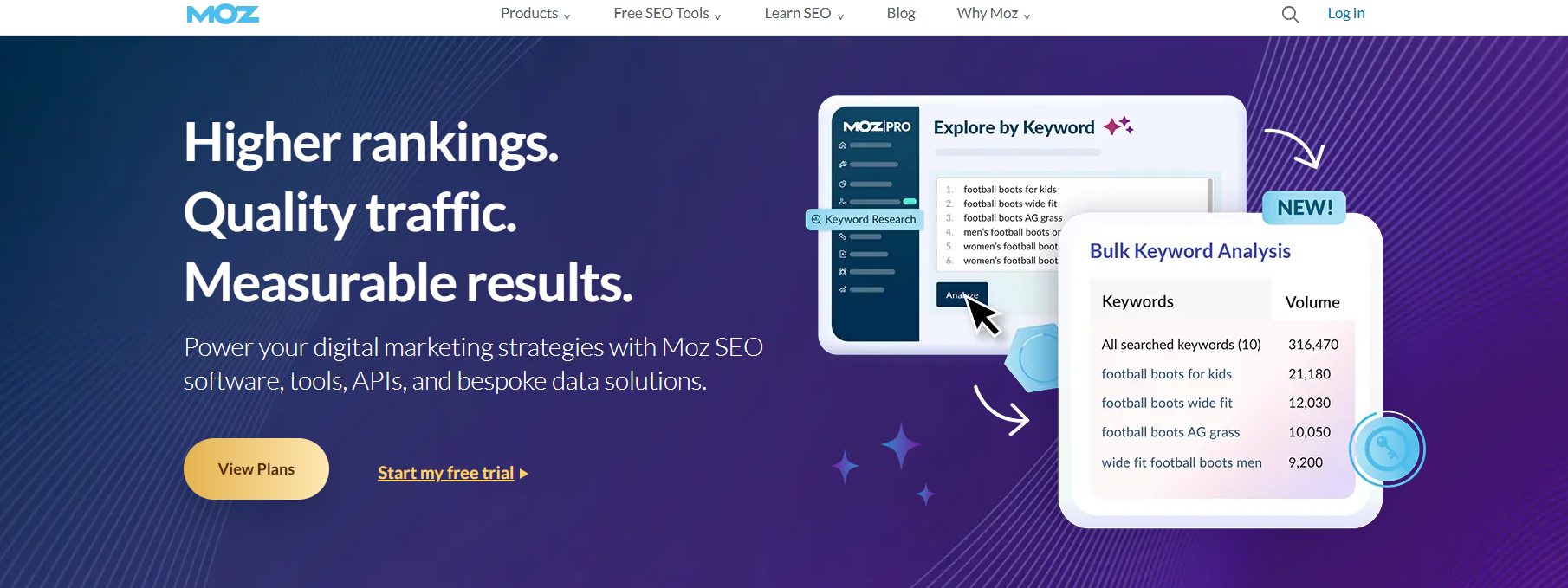
Let’s explore what makes Moz stand out and how it compares with other tools.
Moz Features:
Keyword Research: Moz offers an easy keyword tool where you can type a domain name and instantly see the top-ranking keywords.
Site Audit: Check your website’s overall health with a full SEO audit. It highlights technical issues, crawl errors, and gives practical fixes.
On-Page SEO: Get keyword tips and content suggestions to improve your pages. It even walks you through optimizing content step-by-step.
Backlink Tracker: Easily track who’s linking to your website and how those links affect your rankings.
Reports: Create automatic or custom reports using Moz’s built-in templates for domains, URLs, and keywords.
Moz provides all the essential tools for managing your SEO, but it’s not as feature-packed as Semrush or Ahrefs.
Ease of Use:
Moz’s interface is clean and beginner-friendly. Once you log in, you’ll see a dashboard with charts and summaries for your projects.
All tools are neatly organized in the sidebar, making it easy to navigate between sections and understand your website’s performance at a glance.
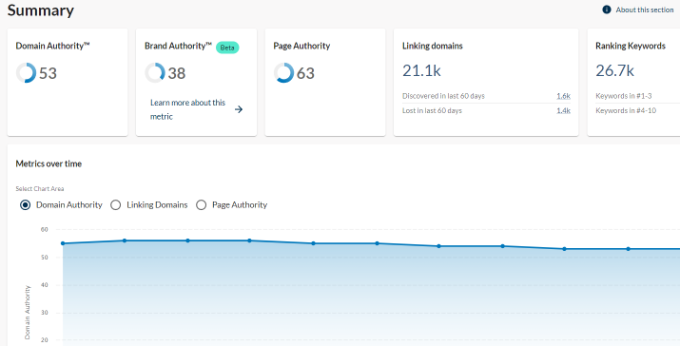
For example, you can open the “Keyword Research” section from the menu on the left.
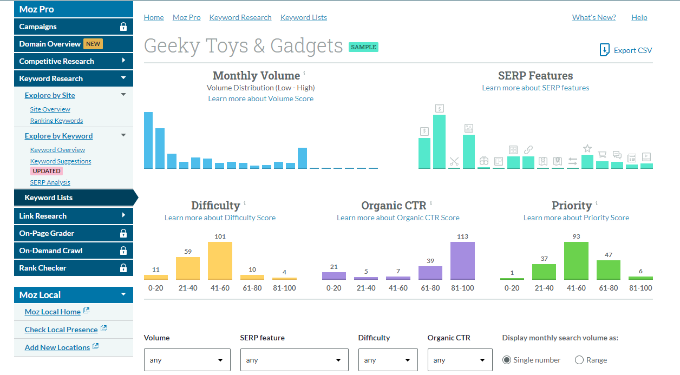
Keyword Explorer – Moz In a word or phrase, and Moz will instantly show you important details — like how many people search for it each month, how hard it is to rank for, and the average click-through rate (CTR) for that keyword.
Pricing: Starts at $49 per month
What We Like About Moz:
Moz is a solid choice if you want an easy-to-use SEO tool with all the essential features. It lets you do keyword research, track rankings, and analyze backlinks without feeling overwhelmed. Plus, Moz provides excellent learning materials and even offers a free trial of its Pro plan — perfect for beginners who want to explore before committing.
What We Don’t Like About Moz:
While Moz covers the basics well, it doesn’t include some of the advanced tools found in Semrush or Ahrefs. Features like content marketing insights and PPC campaign tracking are limited, which might make it less suitable for users who need a more comprehensive, all-in-one SEO solution.
Semrush vs. Ahrefs vs. Moz – Which One Is the Best?
From our experience, Semrush stands out as the best SEO tool available today. It offers the most complete set of features, is easy to use, and provides excellent value for its price.
For website owners, we suggest using Semrush together with All in One SEO — this combination helps you handle everything from on-page optimization to off-page link building.
Our second recommendation is Ahrefs. Although it lacks a few features that Semrush includes and can be a bit costly for larger teams, it’s still a powerful and reliable SEO tool that delivers great results.
Alternatives to Semrush, Ahrefs, and Moz
If you’re not planning to use Semrush, Ahrefs, or Moz, there are a few other SEO tools that work really well and are easier to use.
1. LowFruits
LowFruits is a simple yet powerful tool for keyword research and SEO analysis. It’s perfect if you’re looking for easy ways to find low-competition keywords that can help your website rank higher.
Its Keyword Finder pulls thousands of long-tail keyword ideas from Google’s autocomplete results. You can use these ideas in your blog posts or website content to attract more visitors.
LowFruits also allows you to track your keyword rankings and view clear, easy-to-understand reports. You can choose how often it checks your rankings — daily, weekly, monthly, or whenever you want.
Another cool feature is its Keyword Extractor, which finds the top keywords your competitors are ranking for. You can add multiple websites, and it will show up to 1,000 keywords for each.
2. SEOBoost
SEOBoost (by AIOSEO) is an AI-powered SEO and content optimization tool. It’s another great alternative to Semrush, Ahrefs, and Moz, especially if you want help creating and improving your website content.
With SEOBoost, you can do keyword research, get headline ideas, run SEO audits, and make sure your content is fully optimized for search engines.
In the Topic Reports section, you’ll get detailed data such as average word count, readability, keyword use, competing pages, related questions, and important terms to include in your content.
You can also paste your article into the tool, choose a target keyword, and SEOBoost will tell you exactly which words and phrases to add to improve your ranking.
Conclusion:
In 2025, Semrush remains the best all-in-one SEO tool for in-depth analysis, while Ahrefs excels in backlink insights, and Moz is ideal for beginners. Each has its strengths, but combining the right tool with a strong strategy delivers the best results.
Partner with A99 Solutions to maximize your SEO success using these powerful tools and expert-driven strategies!